Stockholm is built upon several islands, where Gamla Stan (Old Town) is geographically in the center, from there the city started to spread out, foremost during the 19th century and today more than two million live in the greater Stockholm area. Here is a short description of the different neighbourhoods that is counted as the inner city or “innanför tullarna” as we say in Stockholm, which means within the toll gates. Those where located where city and countryside met and where the farmers brought their goods along the major roads.
There is also a summary of the area outside the inner city, which I just call “Outer Stockholm”, these includes all suburban areas of Stockholm.
Key attractions, sights and things to do are mentioned here as well but please find more information about these in the “To-do” section.
Norrmalm
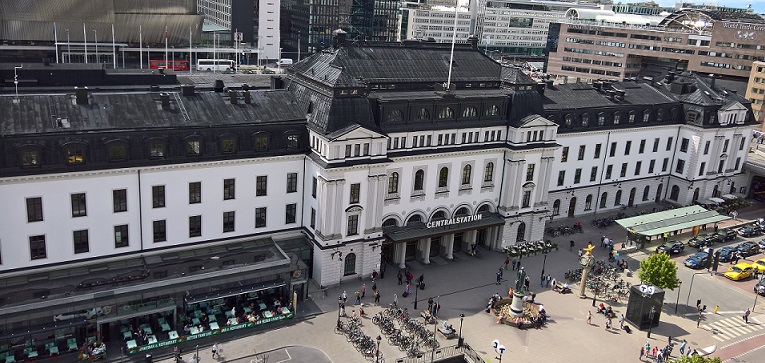
Also known as ”city”, here you find the main commuter hub, that includes Stockholm Central Station, with train connections all across Sweden and also to Norway and Denmark (through Malmö) as well as Arlanda Express. Stockholm City is the station where you can find commuter trains (pendeltåg). T-centralen which is the only metro station with connections to all lines and Cityterminalen, with bus connections all across Sweden and also the airport buses. All these are connected through each other and could be counted as one and the same commuter hub. You will also find a lot of shopping opportunities within the Norrmalm district.
There are not many living within this district as most buildings are either commercial ones or office buildings, there are restaurants in the area but it’s not a vibrant area after the shops have closed. Unfortunately most of the architecture is from the late 1950’s, 1960’s and 1970’s, when pretty much all old buildings were demolished. The city center of Stockholm is the most demolished one in Europe out of those not affected by the second world war.
Summary: Commuter hub, offices, shopping
Sights and Attractions: Royal Opera, Skeppsholmen (island), Hötorgshallen (market hall)
Getting here: T-centralen (all lines) or Hötorget (green line) with metro, Stockholms Central with train or Arlanda Express, Cityterminalen with long-distance buses and airport buses or Stockholm City station with commuter trains.
Östermalm
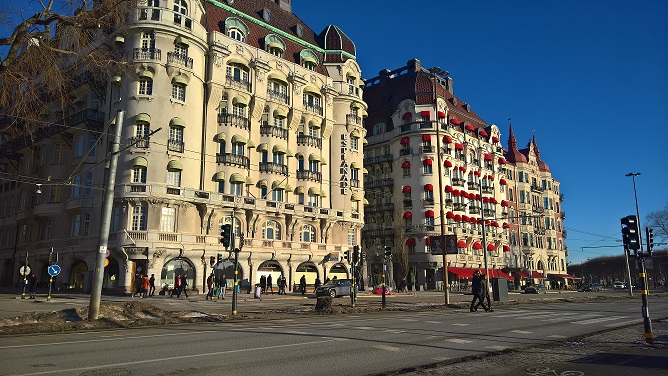
This is a wealthy neighbourhood with avenues, high-end shops and architecture mostly from the second half of the 19th century (1870-1900) . Around the area of Östermalmstorg (Östermalms square) you can find the old food market, Östermalmshallen, which is currently being restored but is open in a temporary building at the square. For everyone interested in local Swedish food I can warmly recommend a visit, here you can find a nice selection of cheeses, meats, fish and traditional Swedish cuisine. Karlavägen and Narvavägen are two avenues that meet at Karlaplan, here you can find “Fältöversten” shopping center, while the building is ugly the surroundings are pleasant and excellent to walk around at during summer.
By the sea at, Strandvägen you find hotels, restaurants and shops with Swedish design, as well as an excellent view towards Djurgården, the bridge to Djurgården can also be accessed from the juncture of Strandvägen and Narvavägen.
Summary: Wealthy neighbourhood with posh shops and restaurants
Sights and Attractions: Royal Dramatic Theatre, Swedish History Museum, Army Museum
Getting here: Metro to Östermalmstorg, Stadion or Karlaplan (red line), tram to the Royal Dramatic Theatre from Sergels Torg
Vasastan
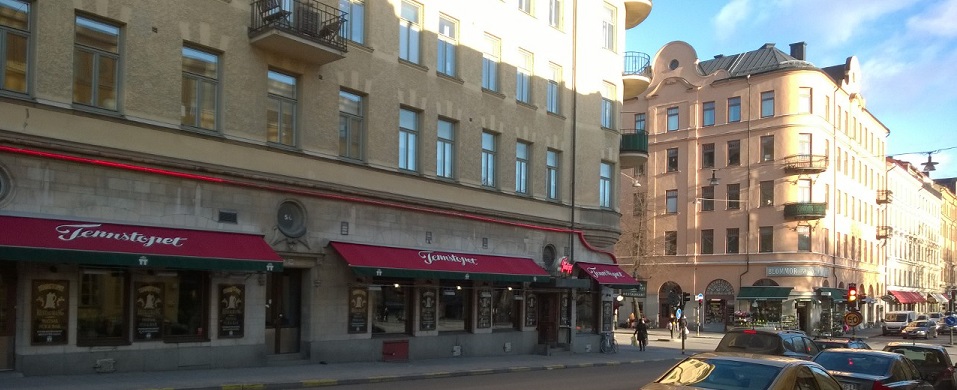
A very popular neighbourhood among families, Vasastan has becoming one of the hottest spots to live in Stockholm, with its combination of a central location and parks it gives a bit of everything. The northern parts of the district, north of Odengatan are more quiet and peaceful. Sveavägen and Odengatan are the main streets, meeting each other by the city library. Both Observartorielunden (with the old observatory at the top) and Vasaparken are nice parks to visit. You will find a good selection of independent shops and excellent restaurants in this neighbourhood.
Summary: Vibrant neighbourhood with excellent restaurants and shops
Sights and Attractions: Stadsbiblioteket (City Library), Observatorielunden, Vasaparken
Getting here: Metro stations Rådmansgatan, Odenplan and St Eriksplan on the green line or bus 4 are the easiest options, short walk from the city center.
Gamla Stan
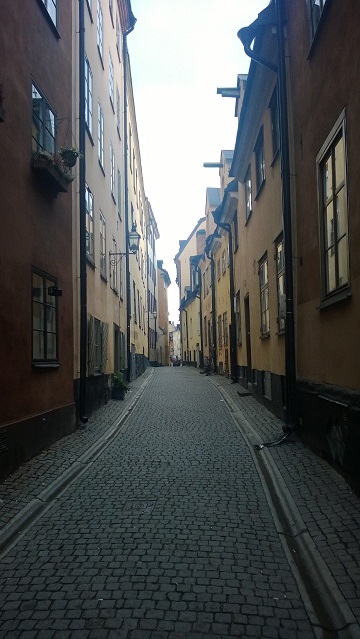
..or in English “Old Town”, as the name suggests this is the oldest part of Stockholm, when Stockholm received its city rights in 1252 the Old Town was surrounded by countryside and wilderness. Here you can find the Royal Castle, three beautiful churches in Storkyrkan, Tyska Kyrkan (German Church) and Riddarholmskyrkan, all three well worth a visit. Narrow alleys, plenty of good restaurants (just watch out for a few tourist traps) and lot of souvenirs (same as with the restaurants, some, mostly along “Västerlånggatan” are tourist traps that should be avoided).
From Skeppsbron (the quay towards the ocean) you can find the ferry to Djurgården.
Summary: Narrow alleys, old buildings, churches and the Royal Castle
Sights and Attractions: Royal Castle, Storkyrkan, Tyska Kyrkan, Riddarholmskyrkan
Getting here: Metro to Gamla Stan (red or green line) station or bus 3 and of course you can just walk here due to the central location.
Södermalm

Historically Södermalm was the working class neighbourhood, nowadays it’s trendy where you can find plenty of cultural persons as well as hipsters, with a good range of independent shops and interesting restaurants Södermalm is always lively and vibrant. The SoFo area has a very concentrated amount of shops and restaurants and is thus a popular destination, north of Katarina Church you can find many of the old workers houses dating back to 18th and 19 centuries. In these days they are picturesque cottages but back then crowded buildings with very low living standards, down belong along the quay you can find the ferries and cruise ships as well as the Museum of Photography.
Summary: Vibrant part of time with independent shops and restaurants
Sights and Attractions: Fjällgatan (great views), Museum of Photography, SoFo
Getting here: A number of metro stations depending where you go, Slussen, Zinkensdamm and Hornstull on the red line, Slussen, Medborgarplatsen and Skanstull on the green line, Stockholm Södra (Stockholm South) with commuter train or a number of buses, including bus 3 and 4.
Kungsholmen
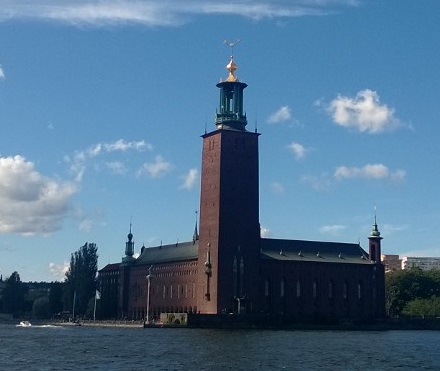
In many ways a quieter part of the city with its many institutions but Kungsholmen has plenty of offer for you as a visitor. We have the ever-so popular Town Hall, which is a beautiful building that every year hosts the Nobel Prize ceremony and is well worth a visit, a walk along lake Mälaren along Norr Mälarstrand from the town halls is recommended. Pipeska Muren dating back to the 17th century and the Court House are also worth a visit. In the central the enormous and ever so ugly Police House rises, beyond that you can find Fridhemsplan, with an active nightlife it’s a popular destination for the youth. Western parts of Kungsholmen are residential areas and more suburbs than parts of the city center.
Summary: Filled with institutions but also several sights worth visiting
Sights and Attractions: Town Hall, Piperska Muren, Court House, walk along Norr Mälarstrand
Getting here: Metro to either Rådhuset or Fridhemsplan (blue line and green line), bus 3 or just take a walk, it’s located west of Norrmalm (city)
Djurgården
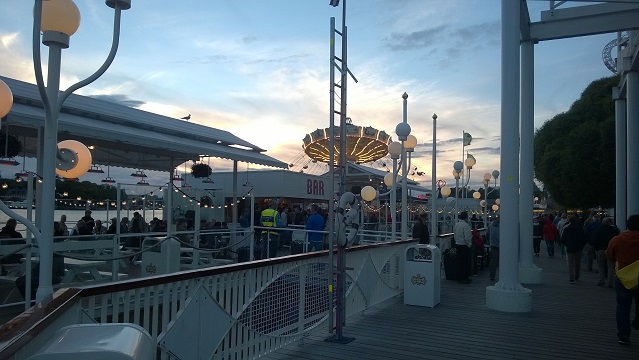
..or Royal Djurgården as its actual name is, traditionally hunting ground for the Royal House but in these days a place filled with attractions, museums and park areas, this neighbourhood is the number one tourist spot together Gamla Stand (Old Town). With the Vasa Museum, Nordic Museum, Skansen outdoor museum, Gröna Lund amusement park, ABBA museum and much more there will be plenty to do no matter of interest. Most of the museums and attractions are located on the western part of the island, so it will be easy to travel around. For those who like to walk or take a ride with the bike the eastern parts of the island offer plenty of space and is much less crowded.
Summary: Packed with museums and attractions and excellent possibilities for walks and biking
Sights and Attractions: Vasa Museum, Nordic Museum, Gröna Lund, Skansen, Biological Museum, ABBA museum, Rosendals Slott (castle) with garden etc
Getting here: Ferry from Gamla Stan (from Skeppsbron), tram from city (Sergels Torg) or bus 67or 69 and 76 to Djurgårdsbron (bridge). You can also walk here with ease from Östermalm, just follow Strandvägen from the Royal Dramatic Theatre.
Outer Stockholm

While most restaurants, shopping and attractions can be found within the city center there is plenty to see and experience if you travel a bit further away.
My first and foremost advice is to take a boat to the archipelago, it’s vast and beautiful and there are lot of boats leaving from the central parts of Stockholm, either just take a tour for a couple of hours or you can visit one of the many islands for a day or longer.
The Royal Castle of Drottningholm is located on the island of Ekerö and is a must if you like historical buildings, the Royal family or just enjoy walking in a beautiful castle garden.
For those of you with a fancy for shopping there are plenty of offers, Mall of Scandinavia is the largest shopping center in the Nordic countries and is located just a short train ride from Stockholm City Station.
In Kungens Kurva south of Stockholm you can find the first IKEA store in Stockholm, it’s still the largest one in the world.
Summary: Archipelago, Lake Mälaren, shopping
Sights and Attractions: Archipelago, Drottningholms Slott, Mall of Scandinavia, IKEA
Getting here: See the To-do section where this is described for each sight and attraction.